
What Will It Actually Take to Scale Carbon Dioxide Removal?

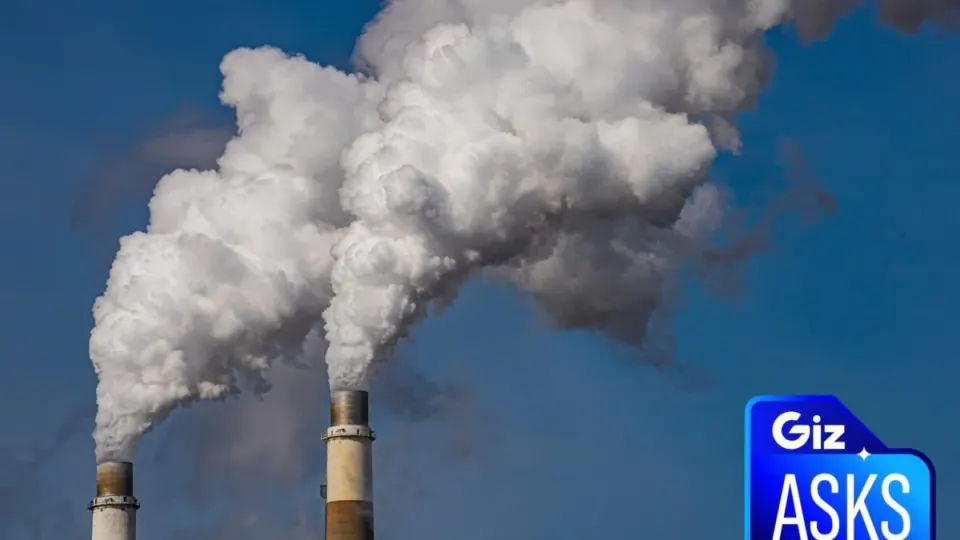
A new issue was on the table at this year’s United Nations Climate Change Conference, COP31. Instead of asking how we can keep global temperatures from rising 2.7 degrees Fahrenheit (1.5 degrees Celsius) above pre-industrial levels—which is no longer possible—negotiations are centered around what it will take to bring temperatures back down again.
That will require net-negative emissions: cutting carbon emissions down to zero while also removing massive amounts of carbon dioxide (CO2) from the atmosphere each year. Right now, the world isn’t even on track to achieve net-zero emissions, as the breakdown of COP31 negotiations over commitments to phase out fossil fuels makes painfully clear. What’s more, the nascent carbon dioxide removal (CDR) industry will need to scale radically to remove CO2 at the gigaton scale necessary to reverse global warming.
Current CDR approaches span a wide range, but they generally fall into two camps: nature-based solutions and emerging technologies. The former leverage ecosystems’ natural ability to capture and store carbon through strategies such as reforestation and afforestation, agricultural soil carbon sequestration, and wetland restoration. Though proven to be effective, these approaches are unlikely to deliver all the carbon removal needed to reverse global warming on their own.
That’s where technological CDR strategies come in. Among the most promising is direct air capture and sequestration (DACCS), which sucks CO2 straight out of the atmosphere for eventual burial underground. Others increase the amount of CO2 the ocean can absorb or burn carbon-storing crops to produce bioenergy while capturing the resulting emissions.
The trouble is, these technologies are nowhere near ready for gigaton-scale deployment. At the same time, the need to rapidly decrease atmospheric CO2 concentrations is only growing more urgent. For this Giz Asks, we asked experts what it will actually take to scale CDR. While they pointed to numerous challenges, the pathway to scaling is not necessarily infeasible.
A senior research engineer at the Massachusetts Institute of Technology Energy Initiative and co-author of Carbon Removal. Herzog’s research interests include greenhouse gas mitigation technologies, CO2 capture and storage, carbon removal, and direct air capture.
It first needs to be recognized that there are many different approaches to CDR. For any pathway to scale, it must demonstrate it can meet key criteria, including:
All CDR pathways face challenges to meet these and other basic criteria, with the exact challenges varying from pathway to pathway. However, I would say the biggest barrier to scaling CDR today is project financing. Financing must cover the costs of a CDR project, which vary from tens of dollars per ton CO2 (for example, afforestation and reforestation) up to the high hundreds of dollars per ton CO2 (for example, direct air capture).
Today, the two main vehicles for financing CDR projects are from government programs addressing climate change or voluntary carbon markets. Since removing a ton of CO2 from the atmosphere has the same impact as avoiding putting a ton of CO2 emissions into the atmosphere, CDR must compete with emissions mitigation pathways.
In general, it is cheaper to mitigate than remove. This means government policies and carbon markets can get more bang for the buck by paying for mitigation. However, once we mitigate around 70% to 80% of today’s emissions, the economics change because all the relatively inexpensive mitigation targets will have been exhausted.
Mitigating that last 20% to 30% can be quite expensive, meaning removal technologies may become the most cost-effective options in many cases. If governments and their citizens are willing to pay to get to “net-zero” (where all remaining emissions are balanced by removals) or even “net-negative” (where we are lowering atmospheric CO2 concentrations), then financing for CDR at scale will be available.
In summary, there are three requirements for CDR to scale. First, CDR pathways must be shown to be effective on criteria like permanence and accounting. Second, worldwide CO2 emissions need to be drastically reduced to the point where further mitigation costs are comparable to removal costs. And third, governments have to adopt policies that create markets aimed at reaching the goal of net-zero.
Strategy director at the Institute for Policy Integrity and an adjunct professor of environmental studies at New York University. Sylvan’s research and writing focus on issues including CDR, sustainable infrastructure, technology development, and decarbonization strategies.


Comments 0
No comments yet. Be the first to share your view in the app.
Join the discussion: comments and votes are in the free Beloud app.