
War-hit Black Sea route for Russian and Ukrainian grain, and India’s stake in making it safe again

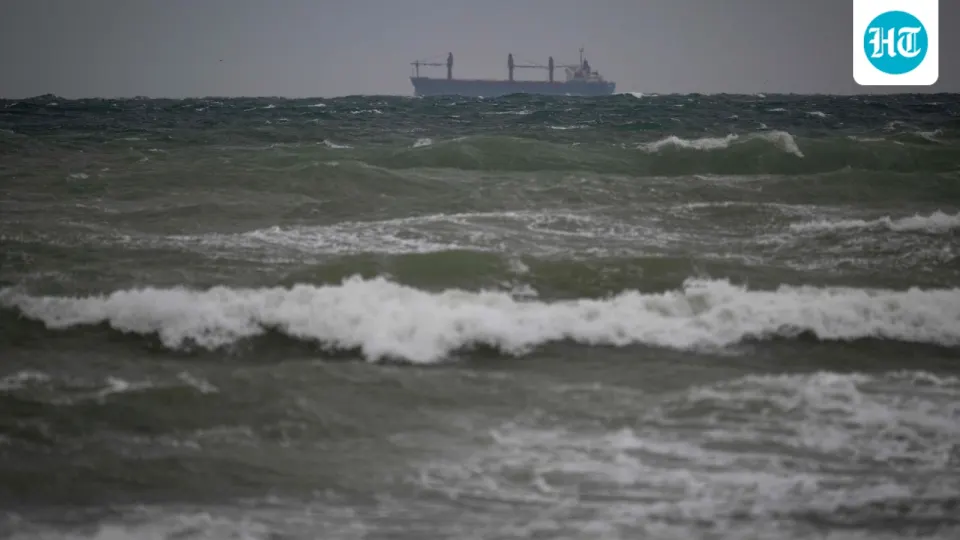
India said on Tuesday that it was in talks with Russia and Ukraine on the safety of shipping in the Black Sea, where attacks on ships and ports during the nearly five-year war between the two countries have largely shut their main grain export route.
Randhir Jaiswal, the external affairs ministry's spokesperson, said the talks also covered both countries' concerns over grain and energy exports, and "non-attack possibilities". He added, "On the issue of food corridor, we have exchanged ideas." His remarks followed a phone call between Prime Minister Narendra Modi and Ukrainian President Volodymyr Zelensky.
A food corridor is an agreed sea route along which cargo ships can move products without being attacked. Russia and Ukraine, which together accounted for more than a quarter of global wheat exports in the 2025-26 season, according to US Department of Agriculture data, depend on the Black Sea to ship their grain.
Also Read | India exchanges ideas on ‘food corridors’ with Russia, Ukraine
Negotiators from Russia, Ukraine and the US also began talks in Abu Dhabi this week, the first direct negotiations since February between the two sides.
Sunflower oil is India's third-largest edible oil import after palm and soybean oil, and the country imports almost all the sunflower oil it consumes, about 250,000 tonnes a month, Reuters reported in October. Russia and Ukraine supplied about 59% of the 2.62 million tonnes India imported in the 11 months to September, according to the Solvent Extractors' Association of India, an industry body.
Reuters reported in early October that a 20,000-tonne Russian cargo of sunflower oil bound for India had been cancelled after the supplier could not deliver because of damage to Black Sea port infrastructure. Crude sunflower oil cost $1,432 a tonne at Indian ports in September, 10.8% more than a year earlier, though below August’s $1,496, the association said.
Further, five Indian nationals have been killed in attacks on ships in the Black Sea and two remain missing, Jaiswal said on November 3. External affairs minister S Jaishankar had said last month that New Delhi stepped up its diplomacy on the war after attacks in July killed and injured Indian sailors.
Also Read | Engaged with Russia, Ukraine over food corridor: MEA
Ukraine loads grain at three deep-water ports around Odesa, which can take large ocean-going cargo ships. Russia's main grain terminals are at Novorossiysk and other ports on the Black Sea and the adjoining Sea of Azov.
Ships bound for world markets leave through the Turkish straits, the sea's only outlet to the Mediterranean. Under a 1936 treaty, the Montreux Convention, the straits remain open to merchant ships in wartime.
The attacks that have halted most shipments since July have hit ports and ships inside the Black Sea and the Sea of Azov.
Russian and Ukrainian terminals on the Black Sea and the Sea of Azov shipped an average of 7.2 million tonnes of grain a month last season, according to Reuters calculations. Ukraine has since shifted exports away from the Odesa ports to rail and to river ports on the Danube, whose ships reach the sea through Romanian waters, but the country’s agriculture minister Taras Vysotskyi had said in August that he expected these routes to reach only about half of the country's export potential if the ports remained blocked.






Comments 0
No comments yet. Be the first to share your view in the app.
Join the discussion: comments and votes are in the free Beloud app.